A liquidity mining scam is a fraudulent scheme that mimics real decentralized finance (DeFi) yield programs to trick you into connecting your wallet or depositing crypto, then drains your assets through hidden smart contract permissions. If you suspect you’ve been targeted, stop sending funds immediately and start collecting transaction evidence. The FBI’s Internet Crime Complaint Center (IC3) has flagged this as an active, costly fraud pattern, and speed matters more than almost anything else in what happens next.
TL;DR:
- Most liquidity mining scams use social media and messaging apps to build trust before tricking victims into connecting their wallets.
- Connecting a wallet often prompts an approval for unlimited token allowances, giving scammers ongoing permission to drain funds.
- Scam dashboards may display fake earnings and allow small early withdrawals, encouraging larger deposits before the final theft.
- Immediate actions include revoking smart contract permissions, disconnecting wallets, and collecting evidence for law enforcement, with faster responses increasing recovery chances.
- Forensic investigations can trace stolen funds to exchanges and provide legal documentation, but progress depends on how far the assets move through mixers or cross-chain transfers.
Table of Contents
- How Liquidity Mining Scams Actually Work
- Red Flags That Signal a Liquidity Scam
- What To Do Immediately After Losing Crypto To a Scam
- What Blockchain Forensics Can and Cannot Recover
- Reporting Channels That Actually Help
- What Cases Like This Actually Teach You
- How Recovera Forensics Supports Victims Ready To Investigate
- Sources
- FAQ
How Liquidity Mining Scams Actually Work
Real liquidity mining rewards people for depositing token pairs into a decentralized exchange pool, earning a cut of trading fees plus governance tokens. Scammers hijack that legitimate concept and strip out everything except the promise of returns.
The approach usually starts somewhere unexpected. Scammers slide into direct messages on Instagram or X, match with victims on dating apps, or post in Telegram groups packed with fake testimonials and bot-generated hype, exploiting the social aspects described in copy trading and social trading guides. The IC3 warning notes that unsolicited outreach through social media and messaging platforms is the most common entry point, often building weeks of rapport before crypto ever enters the conversation.
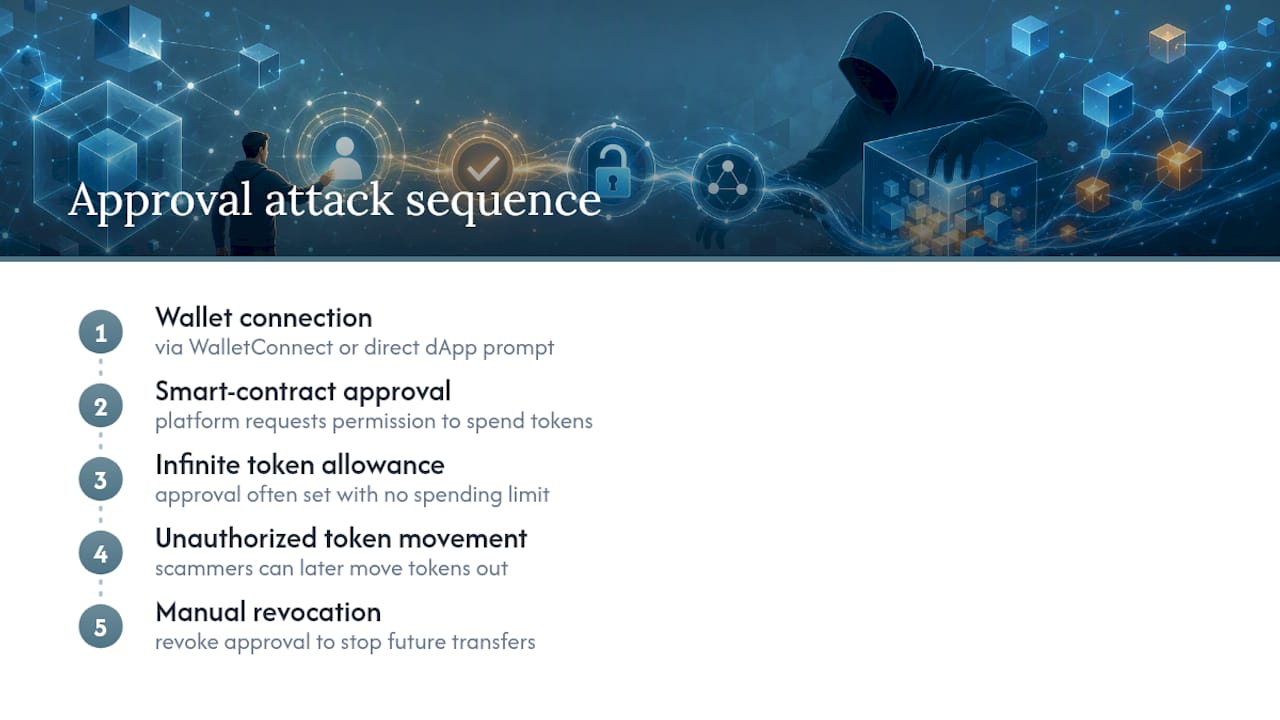
Once trust is established, the onboarding script is remarkably consistent. The scammer walks the victim through buying cryptocurrency on a legitimate exchange, installing a wallet like MetaMask or Trust Wallet, and then connecting that wallet to a “liquidity mining platform” through WalletConnect or a direct dApp prompt. That connection step is where the real damage happens.
Here’s the technical piece most victims never see coming: connecting a wallet often triggers a request to approve a smart contract, and scammers frequently ask for an infinite token allowance rather than a limited one. That approval doesn’t just let the platform pull the amount you deposited. It grants ongoing permission to move that token from your wallet at any point in the future, until the approval is manually revoked. Sophos researchers have documented organized rings running fake apps and malicious contracts built specifically to exploit this mechanism.
Before the drain, most operations run a con within the con. Victims see a dashboard showing daily earnings climbing, and some are even allowed to withdraw a small amount early to prove the platform “works.” Washington Post reporting documented exactly this pattern: a victim whose Coinbase Wallet connected to a fraudulent platform watched a dashboard display growing balances right up until the funds vanished. The staged withdrawal isn’t generosity. Its bait designed to get victims to deposit larger amounts before the real extraction happens.
Red Flags That Signal a Liquidity Scam
Most liquidity mining fraud follows a predictable script once you know what to look for. The details vary, but the underlying pressure tactics repeat case after case.
- Guaranteed daily returns, often quoted at 0.5% to 3% per day, a rate no legitimate liquidity pool can sustainably offer since real returns depend on trading volume and fluctuate constantly.
- Pressure to deposit more or recruit friends, framed as “unlocking higher tiers” or “matching bonuses,” a classic pyramid structure disguised as yield farming.
- Demands for extra payments to release funds, labeled as “miner fees,” “taxes,” or “account unlock fees.” Legitimate DeFi protocols never require a manual release payment to withdraw your own assets.
- Unsolicited prompts to connect your wallet or approve token allowances through links sent in chat rather than a platform you sought out yourself.
- Sloppy or mixed-language websites, look-alike domains that swap a letter from a known protocol’s name, and fake verification badges meant to mimic legitimate audits.
Pro Tip: Before connecting any wallet to an unfamiliar platform, check the token approval request itself. If it asks for an unlimited allowance instead of a specific, capped amount, that’s your signal to close the tab.
Groups built around these platforms also tend to police themselves. Sophos has noted that scam rings use Telegram and WhatsApp communities to manufacture social proof, celebrating fake payouts publicly while quietly banning or muting anyone who raises doubts. If a community moderator shuts down every skeptical question instead of answering it, treat that as confirmation, not reassurance.
What To Do Immediately After Losing Crypto To a Scam
Every hour that passes after you realize something is wrong reduces your odds of tracing and recovering funds, since stolen crypto often moves through multiple wallets or mixers within minutes. Work through these steps in order.
- Stop all communication with the scammer and never send additional funds, even if they claim a “release fee” will unlock your original deposit.
- Revoke the dApp approval you granted using a tool like Etherscan’s Token Approval Checker or Revoke.cash, then disconnect your wallet from the fraudulent site entirely.
- Move any uncompromised funds to a brand new wallet with a fresh seed phrase, but only if you’re confident your original seed phrase itself was never shared or typed into a fake site.
- Collect every piece of evidence: transaction hashes, the scammer’s wallet addresses, screenshots of the dashboard, and full message logs from whatever platform the contact happened on.
- File a report with IC3 and notify any exchange where you purchased or moved crypto, since exchanges can sometimes freeze funds if alerted quickly enough.
The scale of this problem is not small. The FBI’s IC3 reports that liquidity mining scams caused over $70 million in combined victim losses between January 2019 and July 2022 alone, based on complaints and open-source reporting. That figure only reflects reported cases, and law enforcement has repeatedly stated that acting fast improves the odds of exchange cooperation before funds get layered through mixers or bridged across chains.
One detail victims often overlook: revoking a token approval doesn’t undo a completed drain, but it does stop the same permission from being reused if the scammer left the door open for a second attempt. If you’re unsure how to check which contracts hold approval over your wallet, a step-by-step action guide walks through the process alongside the reporting steps above.
What Blockchain Forensics Can and Cannot Recover
Once the immediate bleeding stops, the next question is almost always the same: can this actually be traced? Forensic investigation works by following the money on a public ledger, not by hacking anything back.
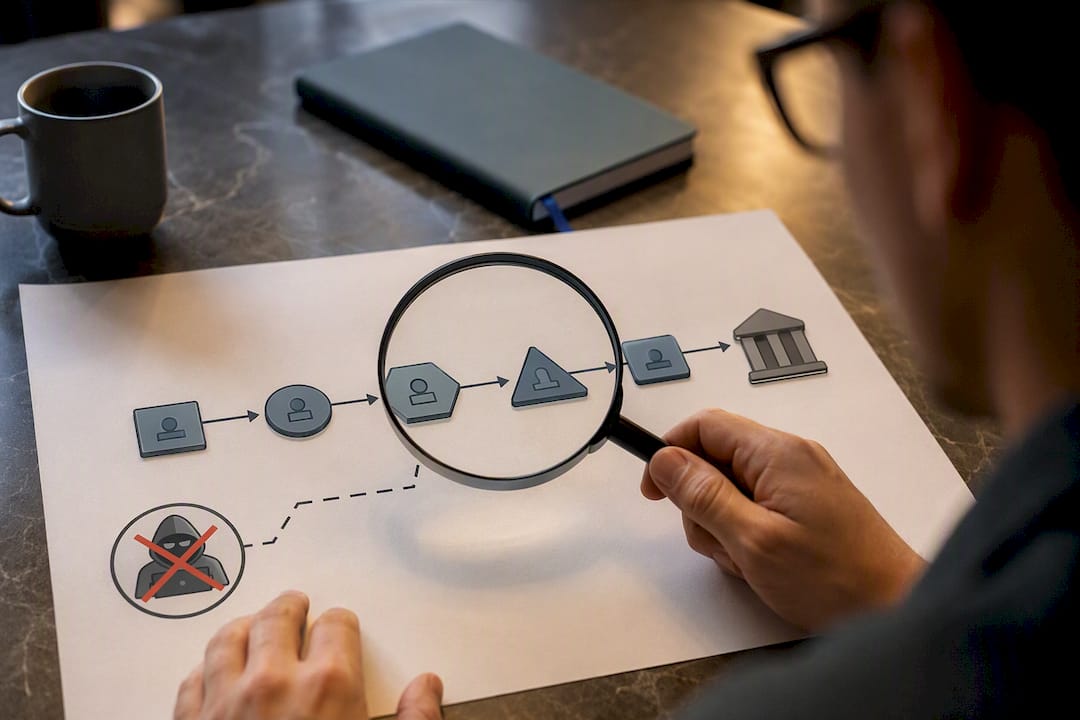
A typical investigation reconstructs a full transaction timeline from the moment funds left your wallet, then clusters addresses that appear to move in coordination, which often reveals a network rather than a lone actor. Investigators look for the point where stolen funds hit an exchange on-ramp, since that’s usually the only place a name gets attached to a wallet address. Every step gets documented with chain-of-custody records suitable for law enforcement or civil litigation.
Deliverables typically include a visual transaction timeline, an address cluster map showing related wallets, and a formal technical report written for legal proceedings rather than casual reading.
- Cross-chain bridges and privacy mixers can break a clean trail and slow tracing significantly.
- Jurisdictional gaps mean some exchanges or wallet providers simply won’t cooperate without a subpoena or law enforcement request.
- Timelines vary widely depending on how many hops the funds took and whether they landed on a regulated exchange.
Pro Tip: Before contacting any forensic firm, gather every transaction ID, the scammer’s wallet addresses, and your full communication history in one folder. A disorganized case takes longer and costs more to investigate properly.
None of this guarantees recovery. What it does is convert a chaotic loss into documented, court-usable evidence, which is often the difference between a dead end and a real legal path forward.
Reporting Channels That Actually Help
Reporting isn’t just paperwork. It feeds databases that law enforcement and regulators actively use to connect cases and freeze funds.
- File a complaint at IC3 with every wallet address, transaction hash, and screenshot you have. Specific details matter more than a general narrative.
- Contact your local FBI field office directly if losses are substantial or if the scam involved cross-border wire transfers alongside crypto.
- Check the DFPI Crypto Scam Tracker to see if the platform that targeted you has already been flagged by other victims, and file your own report there too.
- Loop in the SEC or CFTC if the scheme involved anything resembling securities offerings or leveraged derivatives trading rather than simple token deposits.
- Notify the exchange where you bought your crypto and your wallet provider immediately. Give them the destination wallet address so they can flag it if it ever touches their platform.
What Cases Like This Actually Teach You
The most common mistake victims make isn’t falling for the pitch. It’s waiting days to gather evidence because embarrassment feels worse than the loss itself. Screenshots disappear, chat histories get deleted by the scammer, and by the time someone reaches out for help, half the trail is gone.
The victims who fare best are the skeptical ones early. They screenshot everything, save wallet addresses before clicking connect, and question a dashboard number that only ever goes up. If there’s one habit worth adopting today, it’s this: never approve an unlimited token allowance, on any platform, no matter how legitimate it looks.
— cristian
How Recovera Forensics Supports Victims Ready To Investigate
Recovera Forensics is the alternative to guessing whether your stolen crypto can be traced. Instead of generic wallet lookups, the investigation reconstructs the full path of your funds, clusters connected wallet activity, and builds a technical report suitable for legal proceedings, the kind of documentation that opens doors with law enforcement and courts alike.
Before reaching out, gather your transaction hashes, every wallet address involved, and your complete message history with the scammer. That preparation directly shortens the investigation timeline. Recovera Forensics works case by case with individuals and with law firms handling fraud claims, and the team is upfront that full recovery can’t be guaranteed given how far funds may have traveled through mixers or across chains. What you get instead is a documented, evidence-based investigation and an honest read on what’s realistically possible. Start by pulling together your transaction evidence checklist and requesting a case review.
This article is general information, not a substitute for advice from a qualified financial advisor. Consult a qualified financial professional about your own circumstances before acting on anything here.
Sources
- Internet Crime Complaint Center (IC3) | Scammers Target and Exploit Owners of Cryptocurrencies in Liquidity Mining Scam
- Crypto Scam Tracker – DFPI
- Liquidity mining scams add another layer to cryptocurrency crime — Sophos
- A cryptocurrency scam that used the Coinbase Wallet led … — Washington Post
FAQ
Is Liquidity Mining Safe To Try Legitimately?
Legitimate liquidity mining carries real financial risk like impermanent loss and smart contract bugs, but it’s structurally different from a scam because you keep control of your keys and interact with audited, publicly known protocols rather than an unsolicited contact’s private link.
What Is an Infinite Token Allowance and Why Is It Dangerous?
An infinite allowance is a smart contract permission that lets a platform move a specific token from your wallet indefinitely, not just the amount you intended to deposit, and scammers exploit it to drain wallets after gaining initial trust.
Can Stolen Crypto From a Liquidity Mining Scam Be Recovered?
Recovery isn’t guaranteed, but forensic tracing can follow funds through the blockchain, identify exchange on-ramps, and produce documentation that supports law enforcement action or civil recovery efforts through firms like Recovera Forensics.
Where Should I Report a Liquidity Mining Scam First?
File a complaint with IC3 immediately, then check the DFPI Crypto Scam Tracker and notify your exchange or wallet provider the same day.
How Much Have Liquidity Mining Scams Cost Victims?
The FBI’s IC3 reports over $70 million in combined victim losses tied to liquidity mining scams between January 2019 and July 2022, based on complaints and open-source reporting.