If your crypto dispute is with an exchange or platform you signed terms with, arbitration usually applies and moves faster and stays private. If your case involves fraud by an unknown actor, a regulator, or a criminal referral, courts are often required, since arbitration only works between parties who agreed to it in the first place.
TL;DR:
- Most platform disputes go to arbitration under the Federal Arbitration Act, but courts decide which clause applies when multiple agreements conflict.
- Unknown scammers, regulators, and criminal cases fall outside private arbitration; courts can issue subpoenas, freeze assets, and grant emergency injunctions.
- Among sampled international exchange terms, 80% required escalation before arbitration, and 70% named a sole arbitrator, potentially adding steps before a hearing.
- Preserve transaction hashes, wallet addresses, messages, and timestamps immediately, then document who handles each file to support authenticated evidence in either forum.
- California courts may keep claims seeking public injunctive relief out of arbitration, while other states may enforce broader arbitration waivers.
Table of Contents
- Arbitration vs litigation: a quick practical comparison
- How U.S. law treats arbitration clauses in crypto contracts
- When litigation is required or works better for U.S. claimants
- Practical steps for U.S. crypto victims preparing either case
- Research snapshot: reports and filings shaping this landscape
- Why forum choice changes how we collect and present evidence
- How we help U.S. victims build arbitration or court-ready evidence
- FAQ
- Sources
Arbitration vs litigation: a quick practical comparison
Before diving into the legal mechanics, here is how the two forums stack up on the factors that matter most to someone deciding where to file.
- Speed: arbitration generally resolves faster than a federal or state court case, since there is no public docket backlog or lengthy appeals process.
- Privacy: arbitration proceedings and outcomes stay confidential, while court filings and judgments become part of the public record.
- Remedies: courts can issue injunctions, subpoenas, and broader equitable relief; arbitral awards face limited judicial review under 9 U.S.C. § 10, so overturning one is rare.
- Procedure: discovery scope, how arbitrators get selected, and filing costs differ substantially between the two paths, and those differences often decide which forum favors you.
Which factor matters most depends on what you are trying to recover and from whom.
How U.S. law treats arbitration clauses in crypto contracts
Most crypto platform agreements include an arbitration clause, and U.S. law starts from a strong presumption that those clauses are enforceable. The Federal Arbitration Act establishes that baseline under 9 U.S.C. § 2, meaning a court will typically send a contractual dispute to arbitration rather than hear it directly.
Complications arise when a user has interacted with more than one contract, say a wallet provider and an exchange, each with different forum clauses. In that scenario, courts, not arbitrators, decide which agreement controls and whether the dispute is even arbitrable in the first place. That threshold question has produced real litigation, including the Coinbase-Kramer matter, where plaintiffs pursuing public injunctive relief under California consumer law argued their claims should stay in court despite an arbitration clause. Filings in that case show California courts applying McGill-related reasoning to deny arbitration when a claim seeks relief that benefits the public, not just the individual filer. That creates a federal-state split: some states honor broad arbitration waivers, while California and similar jurisdictions carve out public injunctive relief as off-limits to private arbitration.
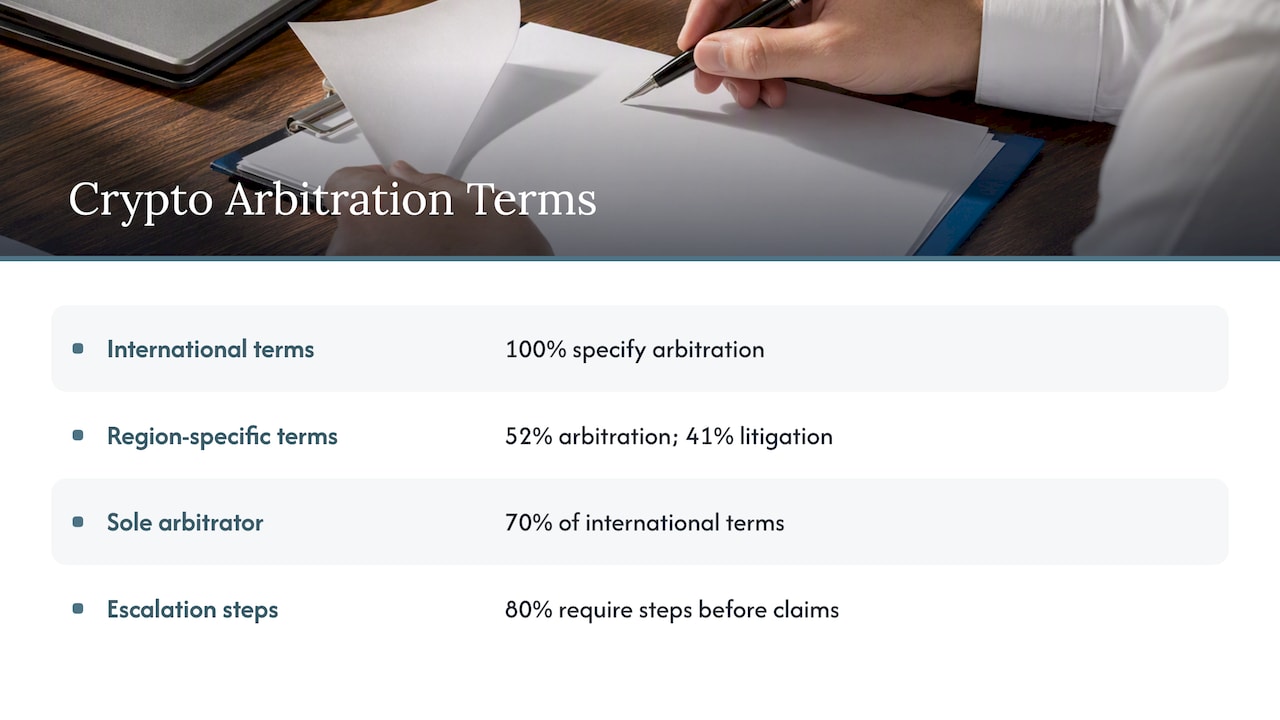
Reed Smith’s 2026 Crypto Disputes Report found that 100% of sampled international exchange user terms specified arbitration, while region-specific terms showed roughly 52% favoring arbitration versus 41% litigation. The same report found that 70% of sampled international terms named a sole arbitrator and 80% required mandatory escalation steps before a claim could reach formal arbitration, often blocking class actions along the way.
When litigation is required or works better for U.S. claimants
Arbitration only binds parties who agreed to it. Several common crypto dispute scenarios fall outside that boundary entirely, or make court the stronger strategic choice.
- Regulatory and criminal matters: actions brought by the SEC or CFTC proceed in federal court and cannot be redirected to a private arbitrator, and the same is true of criminal prosecutions under statutes like wire fraud.
- Public injunctive relief claims: under the McGill line of reasoning, some consumer claims seeking relief that protects the public, not just the individual, may be non-arbitrable in states like California.
- Disputes against unknown or anonymous actors: scams, rug pulls, and third-party fraud typically require subpoenas, asset freezes, and emergency injunctions, tools only a court can issue, since there is no contract to arbitrate in the first place.
- Cross-border enforcement: the New York Convention generally helps arbitral awards get recognized abroad, but public policy exceptions in some jurisdictions can still block enforcement, so cross-border recovery sometimes still needs court involvement.
If your dispute fits any of these categories, arbitration clauses in a platform’s terms of service will not stop you from pursuing a court remedy.
Practical steps for U.S. crypto victims preparing either case
Whichever forum your case ends up in, the period after discovering a loss matters for preserving what you can recover.
- Export every transaction hash, wallet address, and related metadata you can access before an exchange or counterparty has a chance to alter records.
- Save all account messages, emails, and chat logs with timestamps, since these establish intent and timeline in both arbitration and court.
- Begin a documented chain of custody for every piece of digital evidence, noting who accessed what and when.
- Consider a paid blockchain forensic engagement early, since tracing fund flows and identifying custodians gets harder the longer funds sit in mixers or bridges.
- Ask any forensic vendor or attorney how their findings would hold up under Federal Rules of Evidence 702 and 901, since both arbitration tribunals and courts expect reliable, authenticated evidence.
Pro Tip: Start evidence preservation the same day you notice a loss. Waiting can mean the difference between tracing funds to a known exchange and losing the trail in a mixer.
Arbitration tends to move faster but can limit your ability to join other victims in a collective claim. Litigation often takes longer but can secure subpoenas, asset freezes, or a criminal referral that arbitration cannot offer. For a broader walk-through of which path fits your situation, our action plan for crypto fraud victims covers both civil and criminal routes in more detail.
Research snapshot: reports and filings shaping this landscape
That gap between international and region-specific terms suggests platforms calibrate forum choice by jurisdiction, not a single global standard. Judicial review of arbitral awards stays narrow under the FAA, making a vacatur a long shot even when an arbitrator gets something wrong. The Coinbase-Kramer filings remain one of the clearest illustrations of how pleading for public injunctive relief, rather than private damages, can shift a case out of arbitration entirely.
Why forum choice changes how we collect and present evidence
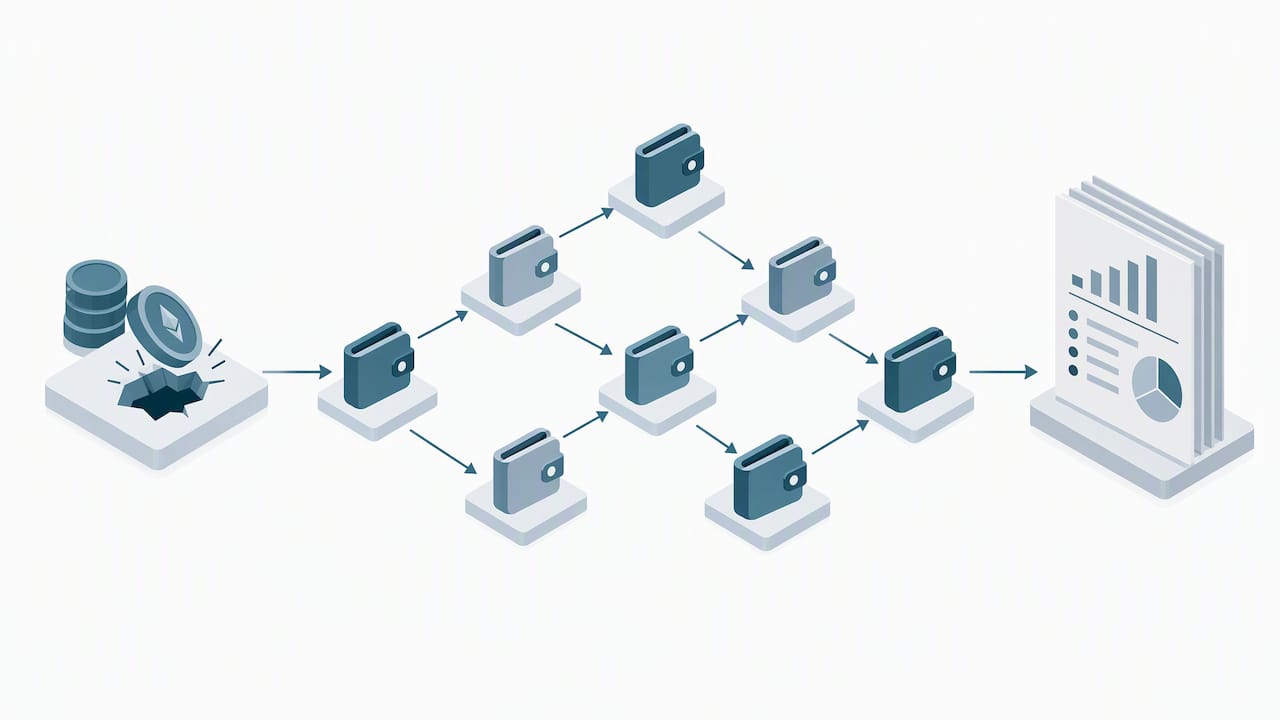
The forum you end up in shapes how early and how thoroughly evidence needs to be locked down. Arbitration’s confidentiality and narrower discovery windows mean a weak evidentiary record rarely gets a second chance to improve before a hearing. Court litigation, with its public docket and broader subpoena power, gives more room to develop a case over time, but still rewards a clean, authenticated trail from day one. In our experience, tracing wallet flows, documenting timestamps, and preserving chain of custody can help build a forensic report for a case, regardless of which forum it lands in.
— cristian
How we help U.S. victims build arbitration or court-ready evidence
Whether your case heads to a private arbitrator or a federal courtroom, the strength of your claim comes down to the same thing: a clear, defensible trail connecting the loss to the people or wallets behind it. We provide blockchain forensics, OSINT investigations, and technical reports for use in arbitration and court proceedings. Connecting wallet activity to the networks behind a scam takes more than basic transaction lookups, which is why we analyze transaction patterns to build a forensic report. If you are weighing arbitration against litigation, start by getting your evidence preserved and documented now. Reach out through our recovery and investigation services page to get that process moving before records disappear.
This article is general information, not a substitute for advice from a qualified lawyer. Consult a qualified legal professional about your own circumstances before acting on anything here.
FAQ
Which is better, arbitration or litigation for crypto disputes?
Neither is universally better: arbitration tends to suit contractual disputes with a platform you already agreed to arbitrate with, since it is faster and private. Litigation becomes necessary when a dispute involves fraud by an unknown party, regulatory enforcement, or a claim for public injunctive relief that some states treat as non-arbitrable.
Is crypto arbitrage illegal?
Crypto arbitrage, buying an asset on one exchange and selling it on another to capture a price difference, is a legitimate trading strategy and not inherently illegal in the United States. It becomes a legal problem only when it involves fraud, market manipulation, or violations of securities law, which falls under SEC and CFTC enforcement rather than a dispute over the strategy itself.
Does arbitration count as litigation?
No, arbitration is a private dispute resolution process separate from litigation, which refers specifically to court proceedings. Arbitration is often required by a platform’s terms of service and governed by the Federal Arbitration Act, while litigation involves filing a public case in state or federal court.
Is arbitration faster than litigation for crypto cases?
Arbitration generally resolves faster than court litigation, since it skips crowded court dockets and lengthy appeals processes. Speed can vary depending on the complexity of the crypto dispute and whether the arbitration agreement requires mandatory escalation steps before a hearing, a requirement found in 80% of sampled international exchange terms according to the 2026 Crypto Disputes Report.
What should I check before choosing a legal path for a crypto dispute?
Review your platform’s terms of service to see whether an arbitration clause applies and whether it excludes class actions or public injunctive relief claims. If your case involves an anonymous scammer rather than a platform you have a contract with, litigation and law enforcement involvement are typically the only paths available, which is a question worth raising with a qualified attorney or a mediation and arbitration specialist before filing.