Short answer: yes, the FBI can trace stolen crypto, but recovery only happens in a narrow set of cases. Operation Level Up, the IC3 (Internet Crime Complaint Center), and Department of Justice seizure actions are the main channels that turn tracing into action. Recovery depends heavily on how fast you report, where the funds landed, and whether a regulated exchange is involved. Avoid any firm that guarantees a refund for an upfront fee.
TL;DR:
- Report the theft to IC3 and local police the same day, preserving transaction hashes, wallet addresses, timestamps, messages, and original evidence files for investigators.
- Send the receiving exchange the transaction hash and destination wallet immediately; it may freeze an inbound deposit within hours, before withdrawal or conversion.
- Recovery is most plausible when funds reach a regulated exchange with identity records before the thief withdraws, bridges, or mixes them.
- Operation Level Up has notified more than 4,300 victims and helped prevent an estimated $285 million in further losses, but prevention is not reimbursement.
- Reject guaranteed recovery offers that demand upfront fees, seed phrases, or remote device access; legitimate law enforcement does not charge victims.
Table of Contents
- How Tracing Works Versus What Recovery Actually Means
- How the FBI and Partner Agencies Act on Crypto Theft Reports
- When Recovery Is Realistically Possible
- What to Do Right Now if Your Crypto Was Stolen
- How Private Forensic Investigations Fit Into Recovery
- A Realistic Note on Expectations and Scams
- Get Forensic Help When Every Hour Counts
- FAQ
- Sources
How Tracing Works Versus What Recovery Actually Means
Every Bitcoin, Ethereum, or other public blockchain transaction is permanently visible to anyone who knows how to read it. That visibility is why investigators can follow stolen funds from wallet to wallet with a precision that was impossible with cash. Tracing alone, though, does not put money back in your account. It only tells investigators where the funds went and who might be holding them.
Recovery requires a separate legal or operational step after the trace is complete. In practice, past cases show four main mechanisms that actually return funds:
- An exchange freezes the account holding the stolen funds before the thief withdraws or converts them.
- Law enforcement seizes the attacker’s private keys, often through a device seizure or a cooperating party.
- A court orders forfeiture or restitution after a conviction or civil judgment.
- A defendant agrees to return funds as part of a plea deal or settlement.
Without one of these events, tracing simply documents a loss. A forensic report can show exactly where $50,000 moved across six wallets in two hours, but that map does not compel anyone to hand the money back. Compulsion requires a regulated intermediary that must comply with a subpoena, or physical access to the keys themselves.
How the FBI and Partner Agencies Act on Crypto Theft Reports
Reports do not sit idle once they reach federal systems. IC3 functions as the central intake point for crypto fraud complaints, and that data feeds coordinated units including the FBI, the Financial Crimes Enforcement Network (FinCEN), the Secret Service, and specialized teams sometimes referred to as the FFKC within the bureau’s cyber division. From there, Operation Level Up proactively identifies likely victims from exchange and blockchain data and contacts them before they even file a report, aiming to stop a loss while funds can still be frozen.
Operation Level Up has identified and notified more than 4,300 victims, helping prevent an estimated $285 million in additional losses, a sign of how much faster intervention works than after-the-fact recovery.
- Operation Level Up contacts victims proactively, often before they realize the full scope of a scam.
- IC3 centralizes reports so multiple agencies can act on the same data instead of duplicating work.
- DOJ seizure actions follow the legal process once tracing identifies a specific account or asset.
The June 2025 DOJ civil forfeiture complaint targeting $225.3 million tied to investment fraud shows what this looks like at scale when legal process and exchange records line up.
When Recovery Is Realistically Possible
Recovery odds rise and fall on a few concrete factors, and understanding them helps you set realistic expectations rather than false hope.
- Funds land at a regulated U.S. or allied exchange. Exchanges with know-your-customer (KYC) records can freeze accounts and respond to subpoenas, which is the single biggest factor in any successful case.
- You report within hours, not weeks. Once funds are withdrawn, converted, or moved off an exchange, the freeze window closes.
- The attacker has not yet bridged or mixed the funds. Cross-chain bridges and mixing services scatter funds across networks and jurisdictions, making a clean trace far harder to act on.
- A device or account holding the private keys becomes accessible to investigators. Seizure warrants depend on finding something physical or digital to seize.
Cases involving offshore platforms with no KYC requirements, attacker-controlled wallets with no exchange exposure, or rapid mixing rarely end in recovery, even when the trace itself is clean.
Pro Tip: If you notice unauthorized activity, report it the same day. Exchanges can sometimes flag or freeze an inbound deposit within hours, but that window shrinks fast.
What to Do Right Now if Your Crypto Was Stolen
The first 24 to 72 hours matter more than anything that happens afterward. Here is the order that gives you the best shot at any recovery.
- Collect everything on-chain and off. Save transaction hashes, wallet addresses, timestamps, exchange account details, chat logs, and screenshots of any communication with the scammer.
- File a complaint at Ic3 and with your local police department. IC3 asks specifically for wallet addresses, transaction IDs, amounts, dates, and any related communications, so have that information ready before you start the form. Save your complaint and case reference numbers.
- Contact the receiving exchange’s fraud or abuse department directly. Give them the exact transaction hash and destination wallet, since a precise report is far more likely to trigger an internal freeze than a vague one.
- Never pay anyone who promises guaranteed recovery for an upfront fee. Legitimate law enforcement does not charge victims to investigate a crime, and anyone asking for payment, a seed phrase, or remote device access is very likely running a second scam.
- For significant losses, consider a forensic investigator or an attorney. A documented, court-ready trace can matter if you pursue a civil claim or need to press an exchange for a faster response, and preserving device images early keeps that evidence usable later.
Our guide on blockchain forensics techniques walks through how tracing evidence gets built in more technical detail, and our step-by-step action guide covers what to expect once an investigation starts. If identity theft is also a concern after a scam, this identity theft recovery action plan covers the parallel steps worth taking with your banks and credit files.
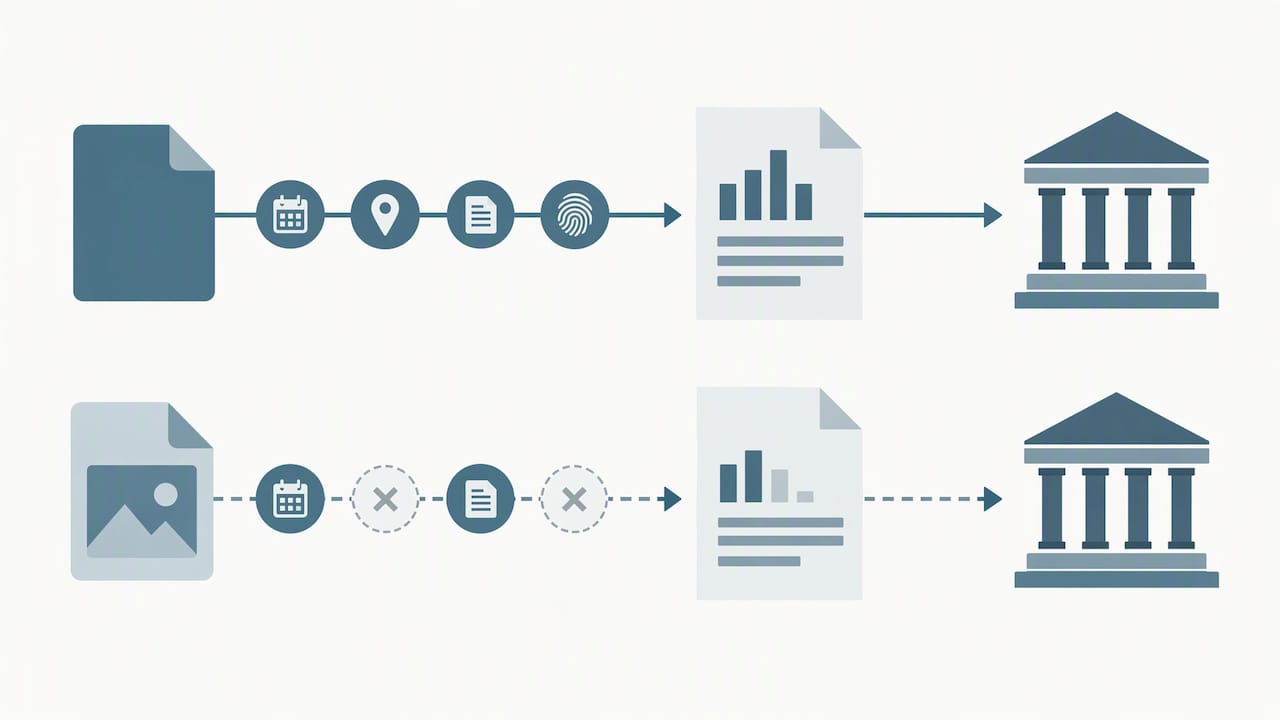
Pro Tip: Keep every piece of evidence in its original file format. A screenshot of a screenshot loses metadata that forensic reports and courts often need.
How Private Forensic Investigations Fit Into Recovery
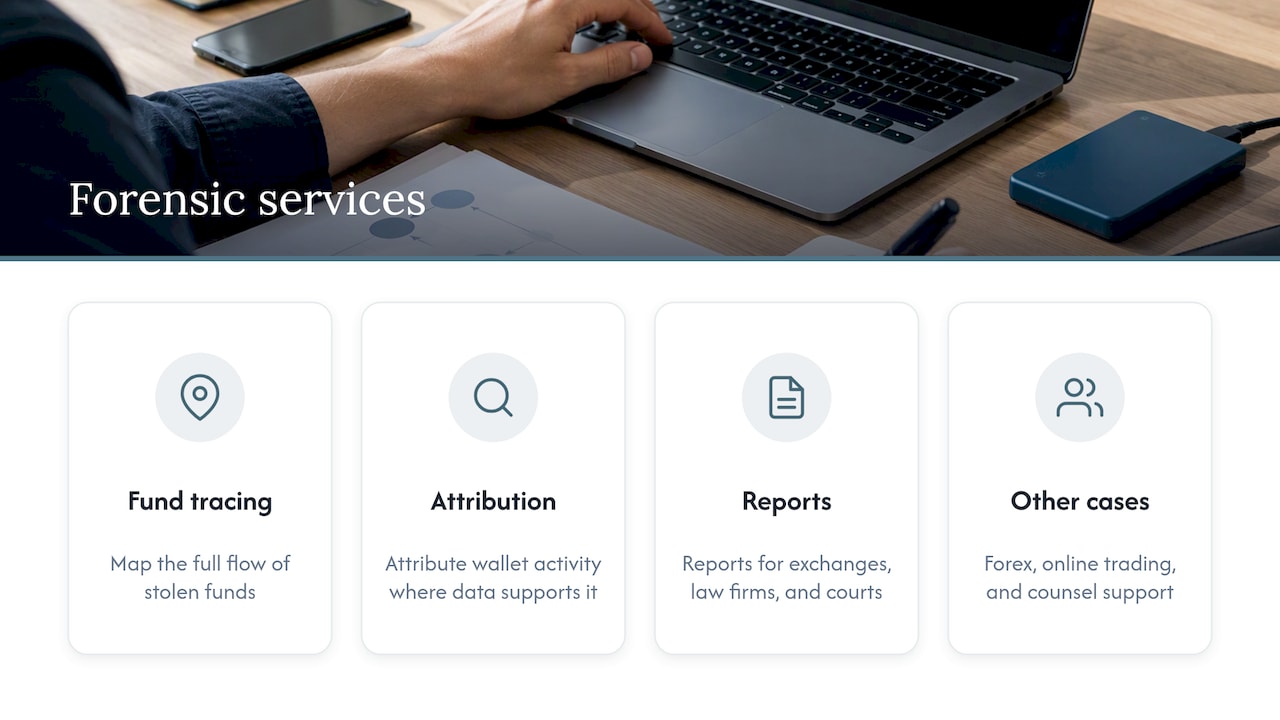
A forensic engagement maps the full flow of stolen funds across wallets, attributes activity to specific entities where the data allows it, and produces a report built to hold up in legal proceedings. For law firms and individuals with significant losses, that level of detail often makes the difference between a vague complaint and a package an exchange or court takes seriously.
- Forensic reports document wallet-to-wallet movement with timestamps investigators can cross-reference against exchange records.
- Private investigators cannot freeze accounts or seize assets themselves, since that authority belongs to exchanges acting on legal process or to law enforcement.
- A well-built report speeds up exchange escalation and strengthens any civil claim built around the stolen funds.
We work this way at Recovera Forensics, building the kind of documentation that supports both law enforcement referrals and civil action.
A Realistic Note on Expectations and Scams
If you just lost crypto, the fear of losing everything is real, and so is the frustration of knowing recovery is not guaranteed. Reporting still matters, even if your individual case does not end in a full recovery, because it feeds the larger pattern investigators use to catch repeat offenders. Watch for anyone who contacts you after your report claiming they can recover funds for a fee.
— cristian
Get Forensic Help When Every Hour Counts
When a theft happens, the gap between a vague police report and a documented, court-ready trace often decides whether an exchange or investigator takes your case seriously. We built our recovery and investigation services around that gap: mapping the full flow of stolen funds, attributing wallet activity where the data supports it, and producing reports that hold up with exchanges, law firms, and courts. We also support Forex and online trading fraud cases and work directly with legal counsel on technical reports. If you lost crypto recently, start with our recovery services page to see how a forensic investigation fits your situation.
FAQ
Can the FBI recover scammed money?
The FBI can sometimes help recover scammed money when funds are traced to a regulated exchange quickly enough to freeze them or when a court orders forfeiture after an investigation. Operation Level Up has notified thousands of victims proactively and helped prevent substantial additional losses, but recovery of funds already stolen remains limited to specific conditions rather than a guaranteed outcome.
Can police recover stolen crypto?
Local police generally lack the resources and jurisdiction to trace cryptocurrency across exchanges and borders, so most crypto theft cases route through federal channels like the FBI and IC3. Filing a local police report still matters because it creates an official record that supports the federal complaint and any later insurance or civil claims.
I lost $16,000 when my cryptocurrency was stolen. How can I recover it?
Start by filing a detailed report at ic3.gov with your wallet addresses, transaction hashes, and timestamps, then contact the receiving exchange’s fraud department directly with the same information. Recovery depends on whether the funds reached a regulated exchange before being withdrawn, and a forensic investigator can help build the documentation needed to push that process forward.
How can I recover lost crypto funds?
Recovery is possible when stolen funds land at a regulated exchange with know-your-customer records, when you report fast enough that the funds have not been withdrawn or bridged, or when a court orders forfeiture after a successful investigation. Avoid any service that asks for an upfront fee or guarantees results, since the FBI and IC3 have repeatedly warned about recovery scams targeting people who already lost crypto once.
Sources
- Operation Level Up
- United States files civil forfeiture complaint against $225M funds involved in cryptocurrency
- IC3 guidance on reporting