If someone you met online is pushing you toward a cryptocurrency investment, stop all payments right now. That combination of romance and crypto is the defining signature of one of the most damaging fraud patterns active today, known formally as a relationship investment scam and colloquially as “pig butchering.”
If you think you are being scammed right now:
- Stop all payments immediately, including any “fees” to release funds
- Cut off contact with the person and do not delete any messages
- Screenshot everything: wallet addresses, transaction IDs, platform URLs, chat logs
- Contact your bank or crypto exchange today and ask about a recall or freeze
- Report to the FTC and the IC3 as soon as possible
Recovery is genuinely difficult once crypto leaves your wallet. Blockchain transactions are irreversible, and funds move fast across borders. Reporting quickly and preserving evidence are the two things that most improve your odds of any outcome at all.
Key Takeaways
Romance crypto scams are organized, long-con operations that combine emotional grooming with fake investment platforms, and stopping payments immediately is the single most important action a victim can take.
| Point | Details |
|---|---|
| Stop payments first | Cease all transfers the moment you suspect fraud; every additional payment deepens the loss. |
| Preserve transaction hashes | Every transaction hash is the starting point for blockchain tracing; save them before anything else. |
| Report to FTC and IC3 | File reports at reportfraud.ftc.gov and ic3.gov; include wallet addresses, transaction IDs, and a full chronology. |
| Scale of the problem | The CFTC documents significant losses in 2023 from financial romance and grooming gangs. |
| Recoveraforensics | Provides on-chain tracing, cluster analysis, exchange liaison, and legal-ready forensic reports for victims with documented losses. |
Table of Contents
- How a romance crypto scam typically unfolds
- Red flags and the phrases scammers commonly use
- Why scammers prefer cryptocurrency and how they move your money
- How to protect yourself while dating online
- What to do if you suspect you are being scammed right now
- Where to report and what to realistically expect
- How professional blockchain forensics works and when to hire a firm
- Why these scams keep rising and what victims should prioritize
- Recoveraforensics can trace where your crypto went
- Sources
- FAQ
How a romance crypto scam typically unfolds
A romance crypto scam pairs emotional manipulation with fake investment platforms to extract money, usually cryptocurrency, from victims who believe they are in a real relationship. The industry term is relationship investment scam; the street name, “pig butchering,” comes from the Chinese phrase sha zhu pan, which describes fattening a pig before slaughter. The CFTC reports that financial romance and grooming gangs stole billions of dollars in 2023 using these methods.
The timeline follows a predictable arc, even when the details vary.
Stage 1: Initial contact. The scammer reaches out on a dating app, LinkedIn, WhatsApp, or even a wrong-number text. The profile is polished, often featuring photos of an attractive, successful-looking person. Within days, the conversation feels warm and personal.
Stage 2: Grooming. Over weeks or months, the scammer builds genuine emotional intimacy. They remember your birthday, ask about your family, share “their own” struggles. This phase is deliberate. Investor.gov notes that these are organized, sophisticated long cons where emotional attachment is used to lower financial skepticism. The relationship feels real because real effort goes into manufacturing it.
Stage 3: The investment introduction. Casually, the scammer mentions how well they have been doing in crypto trading, often crediting a relative or mentor. They offer to show you how. The platform they recommend looks professional, with live charts and a real account balance.
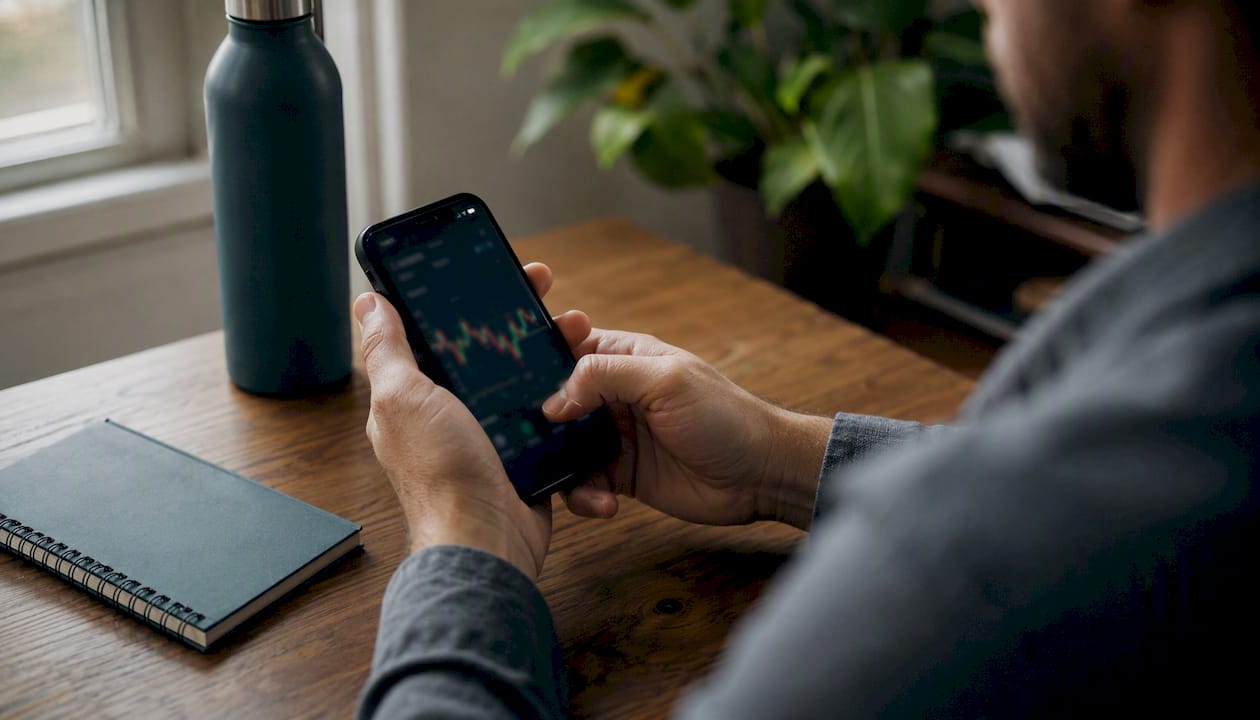
Stage 4: The fake platform. The site is entirely controlled by the scam operation. Michigan’s consumer protection office describes how these platforms allow small early withdrawals to build trust, then block larger ones and demand fake “tax” or “compliance” fees. Your balance may show impressive gains. None of it is real.
Stage 5: Lockout and fee extortion. When you try to withdraw a significant amount, access is blocked. You are told you owe taxes, a verification fee, or a compliance deposit. Paying those fees does not release funds. It escalates the loss.
Consider a common sequence: a person meets someone on a dating app who, after six weeks of daily messages, mentions a crypto platform where they made $40,000 last month. The victim deposits $5,000, watches the balance “grow” to $18,000, withdraws $500 successfully, then deposits $30,000 more. When they try to withdraw everything, they are told they owe a $4,200 tax payment first. The platform disappears after that payment clears.
Red flags and the phrases scammers commonly use
The behavioral pattern is consistent enough that most victims, in hindsight, can identify the exact moment the script started. Knowing the signals in advance is the only protection.
Behavioral red flags:
- Rapid intimacy: declarations of affection within days of first contact
- Pressure to move off the dating platform to WhatsApp, Telegram, or Signal early in the conversation
- Refusal to do a live, unscripted video call (pre-recorded clips or excuses are common)
- Claims of being overseas for work, military service, or an oil rig
- Inconsistencies in their story across conversations
Investment red flags:
- Unsolicited mention of a trading platform, often framed as a personal tip from a family member
- Promises of guaranteed or unusually high returns
- Insistence that you use a specific platform or wallet they supply
- A small early withdrawal that works perfectly, designed to build confidence
- Requests for fees, taxes, or deposits to release your own funds
Phrases that should stop you cold:
- “My uncle works at a trading firm and let me in on this.” Translation: the platform is fake and the uncle does not exist.
- “You just need to pay the tax to unlock your withdrawal.” Authorities are clear: any demand to pay a fee to release funds is a fraudster tactic, and paying it only deepens the loss.
- “I would never ask you for money, I just want to share this opportunity.” The investment IS the ask.
- “The platform requires a compliance deposit before large withdrawals.” No legitimate exchange works this way.
Pro Tip: Run three checks before trusting any platform or person: (1) reverse image search their profile photo using Google Images or TinEye; (2) search the platform name plus “scam” and check the CFTC’s registration database at cftc.gov; (3) request a live, spontaneous video call and watch for any hesitation or excuse.
Why scammers prefer cryptocurrency and how they move your money
Crypto is not incidental to these scams. It is the mechanism that makes them work at scale.
The practical reasons:
- Blockchain transactions are irreversible once confirmed. Unlike a wire transfer, there is no recall window.
- Pseudonymity allows funds to move through multiple wallets before reaching a cash-out point, complicating tracing.
- Cross-border transfers happen in minutes with no correspondent bank to flag suspicious activity.
- Crypto ATMs and peer-to-peer platforms let victims convert cash to crypto with minimal identity verification.
ICE Homeland Security Investigations data shows that a large share of payments to romance scammers were made via cryptocurrency or bank wires, reflecting how deliberately scammers steer victims away from reversible payment methods.
Common payment mechanics victims are steered toward:
| Method | How scammers use it | Recovery difficulty |
|---|---|---|
| Private wallet address | Victim sends crypto directly to scammer’s wallet | High: no exchange intermediary |
| Fake exchange account | Victim deposits to a platform the scammer controls | High: platform disappears |
| Crypto ATM | Victim converts cash to crypto on-site, sends to address | Very high: cash-to-crypto is near-untraceable |
| QR code transfer | Scammer provides a code that routes to their wallet | High: fast and hard to reverse |
| Peer-to-peer OTC | Victim buys crypto from a “seller” who is the scammer | High: no regulated intermediary |
When victims transfer to a private wallet instead of a regulated exchange, tracing can still identify flow patterns on the blockchain, but recovering funds requires coordination with exchanges, law enforcement, and sometimes international partners.
How to protect yourself while dating online
The best time to apply these checks is before anyone mentions an investment. Once emotional attachment forms, skepticism is harder to maintain.
Do:
- Keep conversations on the original dating platform until you have verified the person’s identity through a live video call
- Search the person’s name, phone number, and photo independently before sharing personal details
- Verify any investment platform through CFTC, SEC, or FINRA registration databases before depositing anything
- Tell a trusted friend or family member about the relationship, especially if it is moving fast
- Ask a lawyer or financial advisor to review any investment opportunity before committing funds
Don’t:
- Send cryptocurrency, gift cards, or wire transfers to anyone you have only met online
- Follow links to investment platforms supplied by your online contact
- Assume a working withdrawal proves the platform is legitimate (early withdrawals are a deliberate trust-building tactic)
- Pay any fee, tax, or deposit to “unlock” or “release” your funds
- Move conversations to private apps before verifying identity
Pro Tip: The single most effective third-party check is a direct conversation with someone who has no emotional stake in the relationship. Tell a skeptical friend the full story and ask them: “Does this sound right to you?” Scam scripts often sound convincing to the victim but obvious to an outsider. If you hesitate to tell anyone, that hesitation is itself a signal.
What to do if you suspect you are being scammed right now
Speed matters. Every hour of delay gives funds more time to move through additional wallets and across jurisdictions.
- Stop all payments immediately. Do not send another dollar, regardless of what you are told will happen to your account or your relationship.
- Stop communicating with the scammer. Do not warn them that you are reporting. Block them only after you have preserved all evidence.
- Screenshot everything before blocking. Capture chat logs, the platform URL, your account page showing the balance, any wallet addresses they gave you, and all transaction confirmation emails or IDs.
- Record every transaction hash. These are the alphanumeric strings that identify each blockchain transfer. They are the single most useful piece of evidence for any investigation.
- Contact your bank or crypto exchange today. If you paid by bank wire, call immediately and ask for a recall. If you used a regulated exchange like Coinbase or Kraken to buy the crypto, contact their fraud team and provide the destination wallet address.
- Save email headers. If you communicated by email, preserve the full headers, not just the message body. Headers contain routing data that investigators use.
- Write a chronological summary. Date, time, what was said, what was sent, to which address. Do this while memory is fresh.
The FBI investigates cryptocurrency investment fraud linked to romance scams. Having a clear, documented timeline ready before you make that call will make the intake process faster and more useful.
Where to report and what to realistically expect
Reporting serves two purposes: it creates an official record that supports any future legal action, and it contributes to pattern data that helps agencies disrupt scam networks.
Who to report to and why:
- FTC (reportfraud.ftc.gov): The primary consumer fraud reporting channel. The FTC advises anyone who met someone online who asked for money or offered crypto investment help to report immediately. Reports feed into a national database used by law enforcement.
- IC3 (ic3.gov): The FBI’s Internet Crime Complaint Center. File here for any internet-facilitated financial crime. The IC3’s cryptocurrency reporting documents trends and informs federal investigations.
- FBI: Contact your local FBI field office for large losses or if you have evidence pointing to an organized network.
- CFTC (cftc.gov/complaint): Report if the scam involved commodity futures, forex, or crypto derivatives. The CFTC has enforcement authority over commodity fraud.
- SEC (sec.gov/tcr): Report if the scam involved securities or investment contracts.
- State attorney general: Many states have consumer protection units that pursue fraud cases with local jurisdiction.
What to include in every report:
- Full chronology with dates and times
- All wallet addresses and transaction IDs
- Platform URLs and screenshots of your account
- The scammer’s profile information, phone numbers, and email addresses
- Any bank or exchange records showing outgoing transfers
Scale of the problem: The CFTC documents that financial romance and grooming gangs stole billions of dollars in 2023. Reporting quickly is one of the few factors that meaningfully improves the odds of any recovery.
Cryptocurrency recovery is difficult. Blockchain transactions cannot be reversed by any agency. What reporting does is create the legal foundation for exchange cooperation, asset freezes, and, in some cases, civil or criminal proceedings that result in partial restitution.
How professional blockchain forensics works and when to hire a firm
Blockchain forensics is not magic, and no firm can guarantee recovery. What a qualified firm can do is trace where your funds went, identify the wallets and exchanges that received them, and produce a forensic report that law enforcement and courts can act on.
The process, step by step:
- Intake and evidence review. The firm collects your transaction hashes, wallet addresses, platform URLs, and communication records.
- On-chain tracing. Analysts follow the movement of funds across the blockchain, identifying each wallet the funds passed through.
- Cluster analysis. Using OSINT and blockchain analytics tools, investigators group wallets likely controlled by the same entity and identify patterns connecting them to known fraud networks.
- Exchange liaison. When funds reach a regulated exchange, the firm contacts that exchange’s compliance team with a formal request, supported by the forensic evidence, to freeze or identify the account.
- Legal report preparation. The firm produces a forensic report with documented chain of custody, suitable for submission to law enforcement, a court, or a civil attorney.
What to have ready before contacting a firm:
- Every transaction hash from your transfers
- All wallet addresses the scammer gave you
- Screenshots of the fake platform, including your account balance page
- Complete chat logs and email correspondence
- Bank or exchange records showing the outgoing transfers
What forensics can and cannot do:
Tracing is almost always possible when you have transaction hashes. Recovery depends on whether funds reached a regulated exchange that will cooperate, whether law enforcement acts on the report, and how quickly the investigation begins. Funds that have been converted to cash or moved through privacy coins are significantly harder to recover. International obstacles, particularly when scam operations are based in Southeast Asia or West Africa, add further complexity.
Pro Tip: The single most valuable thing you can provide early is the complete transaction hash for every transfer you made. A wallet address alone shows a destination; a transaction hash shows the exact movement, timestamp, and amount, giving investigators a precise starting point on the blockchain.

Why these scams keep rising and what victims should prioritize
The growth of romance crypto scams is not accidental. Three forces are converging: the global expansion of dating apps that make initial contact frictionless, the mainstream adoption of cryptocurrency that gives victims a plausible reason to engage with unfamiliar platforms, and the emergence of organized criminal networks, sometimes called grooming gangs, that run these operations with the structure of a call center.
What most coverage misses is how deliberately the emotional component is engineered. These are not opportunistic fraudsters improvising. They follow scripts, work in shifts, and hand off “relationships” between operators when needed. The victim’s feelings are real; the relationship is a product.
For victims, the priority order matters. Stop payments first, always. Emotional processing is important and necessary, but it comes after you have cut the financial bleeding. Preserve evidence before you block anyone. Then report, because even if your individual case does not result in recovery, your report contributes to the pattern data that leads to network disruptions.
The shame that many victims feel is understandable and completely misplaced. These operations are run by professionals who exploit the same psychological mechanisms that make all human relationships work. If you need support, the FTC’s guidance points to resources, and organizations like the AARP Fraud Watch Network offer direct helplines for fraud victims.
Recoveraforensics can trace where your crypto went
Losing funds to a romance crypto scam is not the end of the road. Recoveraforensics specializes in blockchain forensics and digital fraud investigation for exactly these cases: tracing stolen cryptocurrency across wallets, identifying exchange touchpoints, and producing forensic reports that law enforcement and attorneys can use.
What the engagement covers:
- On-chain tracing of every transfer using your transaction hashes
- Wallet cluster analysis to connect funds to known fraud networks
- Exchange liaison with formal freeze or identification requests
- Evidence preservation with documented chain of custody
- Legal-ready forensic reports for law enforcement submissions or civil proceedings
No firm can guarantee recovery, and Recoveraforensics will tell you that plainly. What the forensic process does is give your case the strongest possible foundation for any legal or regulatory action that follows. If your losses are significant and you have transaction records, the next step is to start a case intake and let the investigation determine what tracing can establish.
Sources
Use these links based on your situation. If you are in active contact with a suspected scammer, report to IC3 and the FTC first, then contact your bank or exchange. If you have already lost funds and want to explore tracing, start with Recoveraforensics.
- Six Warning Signs of Online Financial Romance Frauds | CFTC
- Michigan
- Investor
- What To Know About Romance Scams | FTC
- Romance scams | FBI
- 2023 IC3 Cryptocurrency Report | IC3
This article is general information, not a substitute for advice from a qualified financial advisor. Consult a qualified financial professional about your own circumstances before acting on anything here.
FAQ
How can you tell if someone is a romance scammer?
The clearest signals are rapid emotional intimacy, refusal to video-call live, and any mention of a cryptocurrency investment opportunity. The FTC warns that anyone met online who asks for money or offers crypto investment help is very likely running a scam.
Can you get money back from a romance crypto scam?
Full recovery is rare because blockchain transactions are irreversible, but partial recovery is sometimes possible when funds reached a regulated exchange and a forensic report is filed quickly. Speed and complete transaction records are the two factors that most affect the outcome.
What phrases do romance scammers typically use?
Common scripts include mentions of a family member’s trading platform, promises of guaranteed returns, and demands for a “tax” or “compliance fee” to release withdrawal funds. Authorities confirm that any fee required to unlock your own funds is a fraudster tactic, not a legitimate exchange requirement.
What is the most common type of crypto scam?
The relationship investment scam, or “pig butchering,” is the dominant pattern. It combines weeks of emotional grooming with a fake trading platform, and the CFTC documents losses exceeding $3.5 billion in 2023 from this category alone.
When does it make sense to hire a blockchain forensics firm?
When losses are significant and you have transaction hashes and wallet addresses, a forensic firm can trace fund flows, identify exchange touchpoints, and produce legal-ready reports. Recoveraforensics offers case intake for crypto fraud victims and will assess what tracing can establish before committing to a full engagement.