Blockchain forensics converts public ledger data into traceable, defensible evidence that links cryptocurrency flows to real-world actors, whether the goal is a criminal referral, a civil recovery suit, or a compliance filing. Every investigation produces a specific set of work products:
- On-chain tracing that follows funds across wallets, exchanges, and chains
- Clustering and attribution linking addresses to likely owners or services
- Off-chain enrichment (KYC records, IP logs, OSINT) that turns a wallet into a name
- A court-ready report documenting methodology and chain of custody
The stakes are real: the FBI’s Internet Crime Complaint Center reported more than $5.6 billion in cryptocurrency fraud losses in 2023 alone, and firms like Recoveraforensics exist specifically to convert that kind of loss into a documented recovery case.
Key Takeaways
Blockchain forensics turns permanent, public transaction data into court-ready evidence by pairing on-chain tracing with off-chain identity enrichment and documented chain of custody.
| Point | Details |
|---|---|
| Forensics beats analytics for legal use | Analytics flags risk in real time; forensics documents reproducible methodology suited for court. |
| Speed affects recovery odds | Funds can move through a mixer or exchange within hours, so early engagement matters. |
| Attribution is probabilistic | Clustering results need human validation and off-chain corroboration before being treated as fact. |
| Admissibility depends on documentation | Reports need preserved hashes, UTC timestamps, and a written, reproducible methodology. |
| Recoveraforensics builds toward legal use | Recoveraforensics produces court-ready reports and victim-centered investigation support for stolen crypto cases. |
This article is general information, not a substitute for advice from a qualified lawyer. Consult a qualified legal professional about your own circumstances before acting on anything here.
Table of Contents
- What Is Blockchain Forensics, and How Does It Differ From Analytics?
- The Step-by-Step Process Behind a Blockchain Forensic Investigation
- Who Hires Blockchain Forensics, and for What Cases?
- How to Evaluate a Blockchain Forensics Tool or Provider
- Why Some Crypto Cases Can’t Be Fully Traced
- What Makes a Blockchain Forensic Report Legally Admissible?
- What to Expect When You Hire a Blockchain Forensics Investigator
- How Investigators Actually Think About a Live Case
- Get a Forensic Trace Started With Recoveraforensics
- Sources
- FAQ
What Is Blockchain Forensics, and How Does It Differ From Analytics?
Blockchain forensics is the discipline of reconstructing cryptocurrency transaction history to a standard that holds up in court or supports a legal claim. That distinction matters more than most people realize. Blockchain analytics tools generate risk scores and real-time alerts. A crypto exchange uses analytics to flag a suspicious deposit and freeze it. Forensics goes further: it builds a documented, reproducible chain of reasoning that a judge, opposing counsel, or a law enforcement analyst can independently verify.
Investigators working forensic cases use a specific vocabulary worth knowing before you read a report or hire someone:
- Address: a public identifier on the blockchain, roughly equivalent to an account number
- Cluster: a group of addresses believed to be controlled by the same entity, based on shared spending patterns
- Attribution: connecting a cluster to a real identity, such as an exchange account or an individual
- Transaction graph: a visual map showing how funds moved between addresses over time
- Chain of custody: the documented, unbroken record of how evidence was collected, handled, and preserved
Consider the practical gap. A monitoring alert might tell an exchange, “this deposit came from an address flagged as high risk.” A forensic report instead documents every hop the stolen funds took across six wallets and two exchanges, includes the transaction hashes and timestamps for each hop, and explains the clustering logic used to conclude that three of those wallets belonged to the same actor. One is a warning. The other is evidence built for legal proceedings.
The Step-by-Step Process Behind a Blockchain Forensic Investigation
A forensic investigation follows a fairly consistent sequence, regardless of whether the case involves a stolen wallet, a ransomware payment, or a Ponzi scheme unwind. Skipping steps or rushing the early ones is usually what sinks a case’s credibility later.
- Intake and evidence preservation. The investigator secures the victim’s own records first, wallet addresses, transaction IDs, screenshots, emails, and locks down timestamps before anything else happens.
- Data collection. Investigators pull raw transaction data from blockchain nodes and public explorers, building a working dataset of every relevant transfer.
- Address mapping. Every address touched by the stolen funds gets logged and organized into a working map of the fund’s path.
- Clustering. Heuristics like common-input-ownership (multiple inputs in one transaction usually belong to the same wallet) and change-address detection group related addresses together.
- Attribution and enrichment. This is where OSINT research, exchange records, and subpoenas convert anonymous clusters into named entities or accounts.
- Transaction graph analysis and cross-chain tracing. Investigators reconstruct the full fund-flow picture, including matching bridge lock events to mint events when funds hop chains.
- Corroboration with off-chain artifacts. Exchange KYC data, IP logs, device forensics, and chat logs get cross-referenced against the on-chain findings.
- Report preparation and chain-of-custody documentation. Every finding gets written up with its supporting methodology and a documented handling trail.
Several technical techniques recur across these steps. Timestamp alignment cross-checks the reported time of a transaction against blockchain confirmation times to catch inconsistencies. Bridge matching pairs a “lock” event on one chain with the corresponding “release” or “mint” event on another, since cross-chain and DeFi activity now routinely obscures simple fund trails. Smart-contract decoding reads the actual logic behind a DeFi swap or contract call, rather than just the surface-level transfer amount.
Off-chain corroboration is where cases actually get won or lost. Investigators typically request exchange KYC records, IP address logs tied to account logins, device artifacts from a victim’s or suspect’s hardware, and chat or email logs referencing the transaction. Pairing on-chain analysis with this kind of off-chain intelligence is what separates a forensic report from a speculative wallet trace.
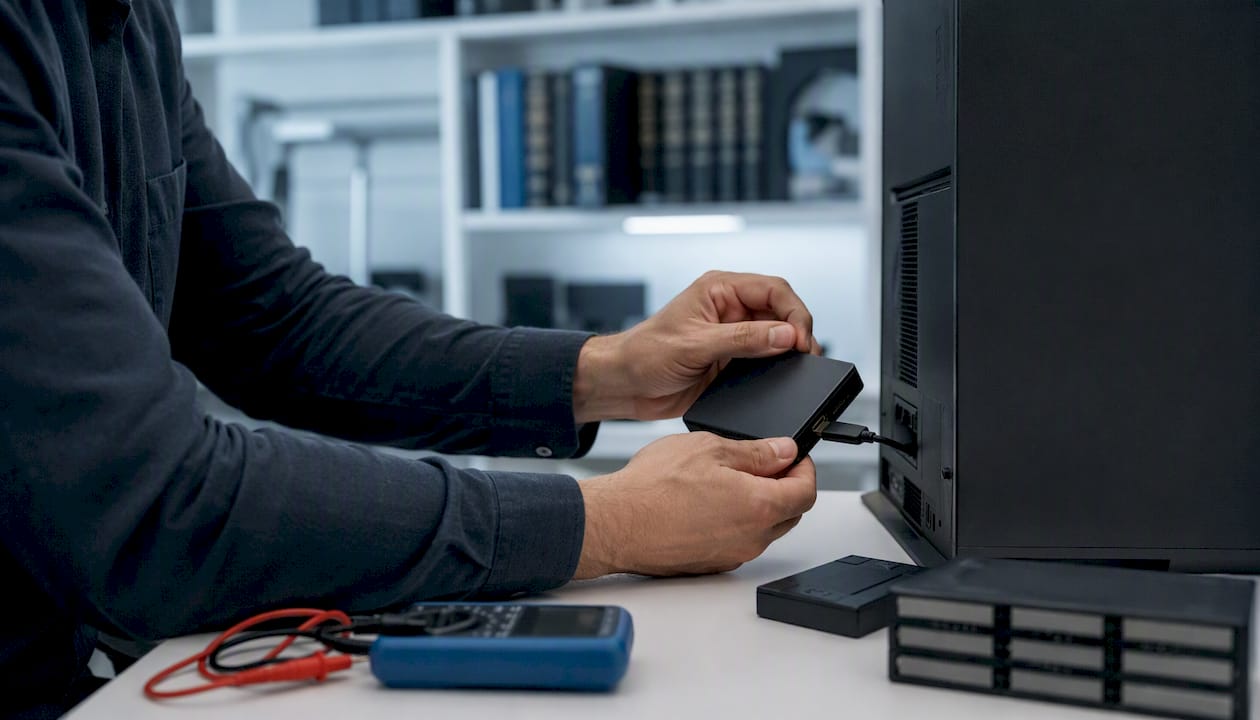
Pro Tip: Preserve raw transaction hashes and UTC timestamps the moment you discover a fraud, before you even contact an investigator. Screenshots with local timezone stamps get challenged in court; raw hash data with UTC timestamps does not.
Who Hires Blockchain Forensics, and for What Cases?
Blockchain forensics gets used across a wider range of situations than most people assume. The common thread is money that moved through a wallet and needs to be traced back to a person, an exchange, or a network.
- Stolen funds and exchange hacks, where victims need a documented fund trail to pursue recovery or a police report
- Ransomware payments, where investigators trace extortion payments to cash-out points
- Darknet marketplace investigations, typically run by law enforcement
- Investment and romance scams, including “pig butchering” schemes where victims are guided into fake trading platforms
- Sanctions evasion cases, where regulators need to prove a wallet is tied to a sanctioned entity
- Civil litigation, including asset tracing in divorce and business disputes involving hidden crypto holdings
- AML compliance investigations run by banks and regulated exchanges flagging suspicious activity
The clients commissioning this work range from individual fraud victims and the law firms representing them to compliance teams inside banks and exchanges, and law enforcement agencies building criminal cases.
The scale is not small. The FBI’s Internet Crime Complaint Center put 2023 cryptocurrency fraud losses at more than $5.6 billion, a figure that keeps climbing as scam networks professionalize.
Time works against victims. Funds sitting in a traceable wallet today can move through a mixer or hit a cash-out exchange within hours, so engaging an investigator in the first days after discovering a theft materially improves the odds of a usable trace.
How to Evaluate a Blockchain Forensics Tool or Provider
Judging a forensic platform or investigator by marketing claims alone is a mistake. A handful of concrete dimensions tell you whether the work will actually hold up.
- Blockchain coverage: which chains and token standards the provider actually supports, not just the major ones like Bitcoin and Ethereum
- Attribution accuracy and methodology transparency: whether the provider documents how clusters get labeled, and whether that methodology is available for review
- Cross-chain tracing: the ability to follow funds through bridges and wrapped-asset swaps, not just single-chain movement
- Fund-flow visualization: clear, exportable graphs a non-technical judge or attorney can actually read
- Exportable evidentiary output: reports formatted with chain-of-custody documentation built in, not bolted on after the fact
- Scalability and integration: whether the tooling handles a single wallet or a network of thousands of addresses, and whether it connects to case-management systems via API
- Customer focus: whether the provider is built for law enforcement, compliance teams, or private investigations, since the deliverables differ
Validating a vendor’s claims means asking for specifics: a sample redacted report, a written description of the clustering heuristics used, an example of a successful exchange subpoena result, and documented error or false-positive rates rather than a vague “high accuracy” claim. A provider unwilling to share a sample report or explain its methodology in plain language is a warning sign, regardless of how polished its sales pitch sounds.
This article intentionally avoids ranking specific competing vendor brands. The dimensions above, blockchain coverage, attribution transparency, cross-chain capability, and evidentiary output quality, are what actually determine whether a report survives scrutiny, not brand recognition.
Why Some Crypto Cases Can’t Be Fully Traced
Blockchain forensics has real limits, and any investigator who claims otherwise is overselling the work. Privacy coins like Monero and strong mixing services break the simple assumption that funds can be followed address to address. High-volume tumbling services blend thousands of transactions together specifically to defeat clustering. Chain-hopping through opaque bridges adds another layer, since reconciling lock events, mint events, timestamps, and relayer behavior across two different blockchains gets exponentially harder with each hop. DeFi automated swaps and CoinJoin-style collaborative transactions further obscure who actually controlled a given output.

Practical barriers compound the technical ones. Some exchanges operate outside any regulatory framework and simply ignore subpoenas. Jurisdictional gaps slow down legal process across borders. Data retention policies mean older KYC records may no longer exist by the time an investigator requests them.
False positives are a real risk in this work. Clustering heuristics are probabilistic, not certain, and shared custodial wallets or reused addresses can make unrelated transactions look connected when they are not.
Address clustering is a statistical inference, not a fact. Defensible attribution requires human validation and corroborating off-chain evidence before any finding gets presented as fact in a legal proceeding.
Treat any report that presents a clustering result as absolute certainty with skepticism. Good forensic work states its confidence level explicitly and backs it with off-chain corroboration.
What Makes a Blockchain Forensic Report Legally Admissible?
A forensic report is only as useful as its ability to survive a challenge in court. Investigators and the attorneys relying on their work should confirm several things before a report gets used in any legal filing:
- Data sources and the acquisition method are documented in detail, not summarized vaguely
- Transaction hashes and timestamps are preserved in UTC and cross-checked against the blockchain record
- The methodology is reproducible, meaning a second qualified analyst could rerun the analysis and reach the same conclusion
- Clustering heuristics carry a documented confidence level rather than being presented as certain
- The report includes a chain-of-custody note for every piece of evidence collected
- The investigator is prepared to explain the methodology under cross-examination if the case goes to trial
Getting from an on-chain lead to a named individual usually requires legal process. Investigators work with attorneys to issue subpoenas to exchanges, and the U.S. Department of the Treasury has made countering illicit finance tied to virtual assets an explicit enforcement priority, which has pushed more exchanges toward faster cooperation with law enforcement requests than was typical even a few years ago.
Courts evaluating expert forensic testimony generally apply something close to Daubert-style scrutiny: is the method testable, does it have a known error rate, has it been subject to peer review, and is it generally accepted in the field. A forensic report built on an undocumented or proprietary black-box method struggles against that standard, no matter how confident its conclusions sound.
Pro Tip: Before hiring an investigator, ask for a redacted sample report and a written methodology statement. If counsel can’t evaluate how a finding was reached, a judge won’t be able to either.
What to Expect When You Hire a Blockchain Forensics Investigator
Engagements follow a fairly predictable timeline. Intake and evidence preservation typically take a few days. Tracing and off-chain enrichment run days to several weeks, depending on how many hops the funds took and how many exchanges are involved. Legal process requests, subpoenas and exchange cooperation, often take the longest, running several weeks and depending heavily on jurisdiction. Final report delivery and any expert testimony support come at the end of that timeline.
A properly built forensic report typically contains:
- An executive summary written for a non-technical reader
- A transaction timeline listing hashes and block numbers for every relevant transfer
- Wallet clustering and attribution findings with the reasoning behind each conclusion
- Visual fund-flow diagrams showing the path of the funds
- Off-chain corroborating artifacts (exchange records, OSINT findings)
- A written methodology statement
- A confidence and limitations section
- A full chain-of-custody log
Clients working with a firm like Recoveraforensics can expect concrete deliverables beyond the narrative report itself:
- Exportable transaction graph images suitable for filing with a court or law enforcement
- Raw traced transaction data in CSV or JSON format for an attorney’s own review
- A redacted version of the evidence suitable for sharing with opposing counsel or a court
- A list of subpoena targets, meaning the specific exchanges or entities counsel should pursue next
Recoveraforensics built its process around this kind of victim-centered, court-ready documentation, which matters most when a case eventually needs to survive scrutiny from a judge, not just convince the client.
How Investigators Actually Think About a Live Case
Every active case comes down to the same early judgment call: preserve evidence first, verify exchange hits fast, and document methodology as you go rather than reconstructing it later. Speed matters because funds move, but rigor matters more, because a fast trace that can’t survive a legal challenge helped no one. The best investigators resist the pressure to promise certainty they don’t have and instead build a case that gets stronger under scrutiny, not weaker.
Get a Forensic Trace Started With Recoveraforensics
Most victims lose critical time trying to trace funds themselves before realizing the trail needs subpoena power and documented methodology to go anywhere. Recoveraforensics specializes in exactly that gap: tracing stolen cryptocurrency through wallet clustering and cross-chain analysis, then converting the findings into a report built for legal proceedings from the start rather than retrofitted later. The firm’s process centers on the victim, walking clients through what the fund trail shows and what legal options it supports, instead of handing over a technical document with no explanation. If you’ve lost cryptocurrency to a scam, hack, or fraudulent platform, the first step is getting your case details in front of an investigator before the trail goes cold. Contact Recoveraforensics to start a case review, or review the full scope of available investigation services to see what a forensic engagement includes.
Sources
- FBI: 2023 cryptocurrency fraud report released
- U.S. Department of the Treasury press release (jy1659)
- ScienceDirect: cryptocurrency forensics research article (2023)
- Blockchain Council: Blockchain forensics for digital assets
FAQ
What Are the 7 Types of Forensics?
Digital forensics broadly includes computer forensics, mobile forensics, network forensics, memory forensics, database forensics, cloud forensics, and blockchain forensics, with the last category focused specifically on cryptocurrency and distributed ledger analysis.
Is Digital Forensics a High-Paying Career?
Digital and blockchain forensics roles tend to pay well relative to general IT work because they require specialized skills in cryptography, legal procedure, and investigative analysis, though exact compensation varies by employer and region.
Which Companies Offer Blockchain Forensics Services?
Providers range from large enterprise-focused analytics platforms used by law enforcement and regulators to specialized recovery-focused firms; Recoveraforensics focuses specifically on tracing stolen cryptocurrency for individual victims and law firms rather than enterprise compliance monitoring.
Can the FBI Track a Bitcoin Wallet?
Yes. Law enforcement agencies including the FBI use blockchain analysis combined with exchange subpoenas to trace Bitcoin transactions to real-world identities, a capability that has led to numerous seizures in cases tied to ransomware and fraud.
How Long Does a Blockchain Forensic Investigation Take?
Initial tracing can take days to a few weeks, but cases requiring subpoenas and exchange cooperation often take several weeks longer depending on jurisdiction and how many exchanges are involved.